The Covenant of Calvary
The greatest covenant we possess is the covenant of Calvary. Every promise and fulfillment of God’s Word is found there. Though it was established through unimaginable suffering, it is God’s most precious covenant, sealed at a blood-stained cross. There, the future of mankind was forever changed. Humanity was redeemed from an eternity lost in outer darkness to the promise of eternal life and everlasting joy in the presence of God.
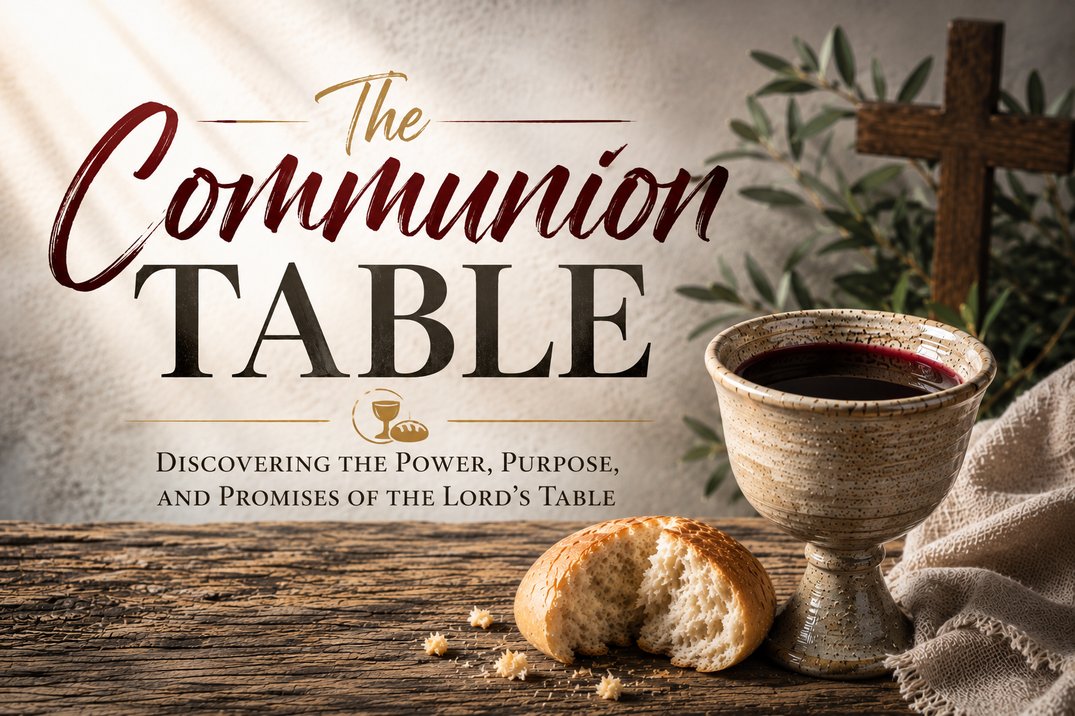
The greatest reminder and revelation of that covenant is found at the Communion Table.
Jesus Longed for the Passover
In Luke 22:14–15, the Bible says:
“When the hour had come, He sat down, and the twelve apostles with Him. Then He said to them, ‘With fervent desire I have desired to eat this Passover with you before I suffer.’”
These words reveal the significance of what was about to take place. Jesus knew that the cross would establish the New Covenant and fulfill everything the Passover had foreshadowed throughout the Old Testament.
Our Need for a Better Sacrifice
At the cross, Jesus became the curse for us. He became our sacrifice for sin and sickness. He who knew no sin became sin for us (2 Corinthians 5:21).
Deuteronomy 28 speaks of both the blessings and the curses. From the very beginning, God’s desire has been to restore humanity into divine favor and fellowship with Himself. The Law revealed God’s holy standard. Blessing was connected to obedience, while the curse was the consequence of disobedience.
Yet Scripture tells us that “by the law is the knowledge of sin” (Romans 3:20). The Law exposed sin, but it could never redeem us from it. Because of this, the priesthood was required to offer continual sacrifices for the sins and failures of both the nation and the individual.
Even so, the blood of bulls and goats could never cleanse the conscience or remove sin. It could only cover it. The Law still left mankind under the curse.
Humanity needed a better sacrifice—one that could completely remove sin, fully restore us to God, and bring us into a personal relationship with our heavenly Father.
The Promise of the Perfect Sacrifice
Hebrews 10:5–7 quotes Psalm 40:6–8:
“Therefore, when He came into the world, He said: ‘Sacrifice and offering You did not desire, but a body You have prepared for Me. In burnt offerings and sacrifices for sin You had no pleasure. Then I said, “Behold, I have come—in the volume of the book it is written of Me—to do Your will, O God.”’”
This powerful Messianic declaration reveals that true atonement for sin would never come through the sacrifices of the Old Testament. Instead, it points us to the One who would become the perfect sacrifice, fully reconciling us to the Father.
The Fulfillment of the Law
Galatians 3:22–24 explains the purpose of the Law:
*”But the Scripture has confined all under sin, that the promise by faith in Jesus Christ might be given to those who believe. But before faith came, we were kept under guard by the law, kept for the faith which would afterward be revealed. Therefore the law was our tutor to bring us to Christ, that we might be justified by faith.”
Yet there was One who was coming to fulfill all that the Law and the Prophets had foretold.
Romans 3:21–22 declares:
“But now the righteousness of God apart from the law is revealed, being witnessed by the Law and the Prophets, even the righteousness of God, through faith in Jesus Christ, to all and on all who believe.”
Then, in John 1:29, John the Baptist saw Jesus and proclaimed:
“Behold! The Lamb of God who takes away the sin of the world!”
Jesus became the sacrifice for us. Through His sacrifice, He accomplished the redemption that restores us to the Father and opens heaven so that every promise of God can be received through Him.
His sacrifice was not temporary, nor was it repeated year after year. He became the one perfect sacrifice for all sin, for all people, for all time, and for all eternity.
The Promise of a New Covenant
Jeremiah 31:31–34 is a lengthy passage, yet it lays the foundation for the pure and perfect covenant that God would establish through Christ—a covenant that would bring us into an eternal relationship with Him and make every one of His promises available to those who believe.
The prophet declares:
“Behold, the days are coming, says the Lord, when I will make a new covenant with the house of Israel and with the house of Judah—not according to the covenant that I made with their fathers in the day that I took them by the hand to lead them out of the land of Egypt, My covenant which they broke, though I was a husband to them, says the Lord. But this is the covenant that I will make with the house of Israel after those days, says the Lord: I will put My law in their minds, and write it on their hearts; and I will be their God, and they shall be My people. No more shall every man teach his neighbor, and every man his brother, saying, ‘Know the Lord,’ for they all shall know Me, from the least of them to the greatest of them, says the Lord. For I will forgive their iniquity, and their sin I will remember no more.”
Under the Old Covenant, the blood of the sacrifice was sprinkled before the mercy seat for atonement or poured against the sides of the altar to make atonement for the sins of the nation or the individual. The body of the sacrifice was either cut into pieces and burned upon the altar, burned outside the camp, or offered as a whole burnt offering.
Yet every one of these sacrifices was temporary. None could permanently remove sin or impart eternal life. They were only sufficient for the present age and continually pointed to something greater that was yet to come.
Jeremiah declared that a day was coming when God would establish a new covenant—one that would completely restore mankind to Himself. It would fully atone for sin, remove it forever, and remember it no more. It would restore every promise of God and bring His people into a living, intimate relationship with Him.
The Institution of the New Covenant
This is why Jesus sat at the table with such fervent desire to share that Passover meal with His disciples. He knew that everything was about to change.
The old covenant was about to be fulfilled. The new covenant was about to be established.
As Jesus continued speaking, He revealed the significance of what was about to take place.
In Matthew 26:26–28, the Bible states:
“And as they were eating, Jesus took bread, blessed and broke it, and gave it to the disciples and said, ‘Take, eat; this is My body.’ Then He took the cup, and gave thanks, and gave it to them, saying, ‘Drink from it, all of you. For this is My blood of the new covenant, which is shed for many for the remission of sins.’”
With these words, Jesus revealed that under the New Covenant, sin would no longer merely be covered—it would be forgiven and completely removed.
A Declaration Until He Comes
Paul reinforces this truth in 1 Corinthians 11:23–25:
“For I received from the Lord that which I also delivered to you: that the Lord Jesus on the same night in which He was betrayed took bread; and when He had given thanks, He broke it and said, ‘Take, eat; this is My body which is broken for you; do this in remembrance of Me.’ In the same manner He also took the cup after supper, saying, ‘This cup is the new covenant in My blood. This do, as often as you drink it, in remembrance of Me.’”
Paul then continues in verse 26:
“For as often as you eat this bread and drink this cup, you proclaim the Lord’s death till He comes.”
Every time we receive Communion, we proclaim the finished work of Christ—His atoning sacrifice for sin and our complete restoration into the presence of the Father. Communion is not merely a remembrance of the cross; it is a continual declaration of our faith in everything Christ accomplished through it.
The Power of the Communion Table
In 1 Corinthians 11, Paul teaches that the Communion Table is far more than a religious ritual. It is a Spirit-filled, power-filled declaration of healing, redemption, and victory for every believer who partakes in faith.
Life and death are represented at the table. Blessing and cursing are set before us. To partake in an unworthy manner is to fail to discern the Lord’s body and the victory He purchased, opening the door to judgment rather than faith. Yet Paul also reveals that many were healed as they partook. The Communion Table became a place of healing because it proclaims the finished work of Christ.
Communion is a living declaration of God’s Word. It is a word of faith that brings the promises of God into present reality. Like every word that proceeds from God, it will not return void. It opens the floodgates for heaven’s promises to be received by faith.
The Communion Table is a living covenant that every believer may confidently stand upon. It becomes a steadfast point of contact that anchors us in every promise of God until Jesus returns.
The blessings declared in Deuteronomy become our inheritance. The righteousness revealed in Romans becomes our righteousness. The Lamb proclaimed by John the Baptist becomes the Lamb who was slain for us—our Redeemer, our sin-bearer, and our sacrifice.
The Joy Set Before Him
Jesus saw all of this as He approached the table that night.
With fervent desire, He shared that final Passover meal with His disciples because He knew what it would accomplish. He would endure the cross, despise its shame, secure our redemption, and then sit down in victory at the right hand of the Father.
The Communion Table forever stands as the testimony of that victory and the everlasting covenant established through His blood.
Come to the Table with Faith
The Communion Table has become the shout of victory for all who believe. It is both the revelation of and our connection to the power of God for every aspect of salvation for those who come with hearts wide open.
Each time we partake of Communion, we bring the victory of Calvary into our lives. We consecrate ourselves to the price Jesus paid and to the power of the victory His sacrifice secured. He gave us the Communion Table as a continual reminder of what He accomplished on the cross and of the ever-present victory that flows from His finished work.
He gave us the table so that, as we partake in faith, we may stand upon and receive every promise purchased through His victorious sacrifice—including healing, provision, breakthrough, restoration, and every covenant blessing that belongs to us in Christ.
Believers, let us come to the table with hearts wide open. Let us come with faith. Let us come with thanksgiving. Let us come with confidence, knowing that the victory over hell, death, and the grave has already been won, and that every promise we need to overcome has been released to us through Jesus Christ.
May we never approach the Communion Table as a mere tradition or religious ritual. Instead, let us come with reverence, expectation, and unwavering faith, knowing that we are remembering the greatest covenant ever established—the covenant of Calvary—sealed by the precious blood of Jesus Christ.
Come to the table, and receive all that Christ has purchased for you in His mighty name!
Call to Action:
#1 – Don’t allow the Communion Table to become a religious ritual. Come with reverence, expectation, and unwavering faith, remembering that Christ’s body was broken and His blood was shed so you could walk in the fullness of His covenant promises.
#2 – Make the Communion Table your point of contact with God’s promises. As you partake, thank the Lord for His finished work and boldly receive by faith everything He purchased for you through His victorious sacrifice.
#3 – Live each day in the victory of the New Covenant. Refuse to be defined by your past, your failures, or your circumstances. Stand upon the finished work of Christ, rejoice in His redemption, and walk confidently in the promises secured through His precious blood.